
Bengaluru leads in flex stock at 31% share; Pune stands out with highest flex penetration of 11.5%; Chennai records over 5X stock growth in 5 years
- Average annual enterprise demand to touch ~200,000 seats in the 2026 & 2027, marking a 25% rise from the preceding two years
- Technology and BFSI firms to drive 60-65% of enterprise demand, while demand from consulting and engineering firms to strengthen at 10-15% share each
- GCCs to accelerate flex adoption and account for nearly 50% of enterprise seat uptake in the next 2 years
Bengaluru, 11 December 2025: India’s flex space market is poised for a decisive growth phase over the next 2-3 years, with flex stock across the top seven cities expected to surpass 100 million square feet by 2027, up from 72.3 million square feet in 2025, according to Colliers’ latest report “Flex India: Pioneering the Future of Work.” The share of flex spaces in the overall office stock is also set to strengthen, with flex penetration likely to rise from 8.5% in 2025 to 10.5% by 2027, supported by sustained operator expansion. This growth will be further fueled by strong enterprise demand, with average annual seat uptake projected to increase 25% over the next two years to around 200,000 seats, compared to 160,000 seats seen during 2024 and 2025.
Trends in Flex leasing and stock (2021-2025E)
| Year | Leasing | Stock | ||
| Leasing by flex operators (msf) | Share in office leasing (%) | Flex stock (msf) | Flex penetration (%) | |
| 2021 | 4.9 | 14% | 30.1 | 4.7% |
| 2022 | 7.1 | 14% | 37.1 | 5.4% |
| 2023 | 8.9 | 15% | 46.8 | 6.4% |
| 2024 | 12.7 | 19% | 59.5 | 7.5% |
| 2025E | 12.9 | 18% | 72.3 | 8.5% |
Source: Colliers
2025 figures are full year estimates based on recent trends
Note: Data pertains to Grade A stock and Top 7 cities including Bengaluru, Chennai, Delhi NCR, Hyderabad, Kolkata, Mumbai and Pune | Gross absorption does not include lease renewals, pre-commitments and deals where only a Letter of Intent has been signed | Flex penetration refers to percentage of flex stock with respect to overall grade A office stock.
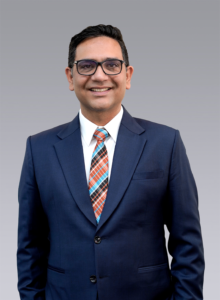
“India’s flex market is entering a pivotal era of expansion, with Grade A stock set to surpass 100 million square feet by 2027, growing annually by nearly 20% across the top 7 cities. As domestic enterprises and global firms, especially Global Capability Centers (GCCs) deepen their flex adoption, operators are responding by curating next-generation, customized workspaces adept with advanced PropTech and sustainable features. The flex market momentum is further being bolstered by growing number of operators raising capital through IPOs, signaling strong investor confidence. Overall, the next phase of India’s flex market will be driven by the growth of technology firms, the expansion of GCCs, changing expectations of occupiers and increasing appetite of institutional investors.”, says Arpit Mehrotra, Managing Director, Office Services, Colliers India.
Bengaluru accounts for 31% of total flex stock, while Pune stands out with highest flex penetration of 11.5%
Bengaluru leads with more than 22 million square feet of operational flex space, followed by Delhi NCR with 12.5 million square feet, together comprising nearly half of India’s total flex stock. In terms of flex space adoption, Pune stands out prominently with highest flex space penetration of 11.5%, driven by sustained demand from technology and BFSI firms, along with start-ups. Meanwhile, Chennai has emerged as one of the fastest-growing flex markets in the country, recording an impressive 5.6X growth in flex stock since 2021.
City-wise trends in flex stock (2025E)
| Cities | Office stock (msf) | Flex stock (msf) | Flex penetration (%) | Flex stock growth (2025E Vs 2021) |
| Bengaluru | 233.7 | 22.6 | 9.7% | 2.0X |
| Chennai | 88.6 | 7.3 | 8.2% | 5.6X |
| Delhi NCR | 152.3 | 12.5 | 8.2% | 2.7X |
| Hyderabad | 124.0 | 9.6 | 7.7% | 2.0X |
| Kolkata | 27.8 | 0.7 | 2.4% | 2.2X |
| Mumbai | 137.0 | 9.7 | 7.1% | 1.7X |
| Pune | 86.0 | 9.9 | 11.5% | 4.3X |
| Pan India | 849.4 | 72.3 | 8.5% | 2.4X |
Source: Colliers
2025 figures are full year estimates based on recent trends
Note: Flex penetration refers to percentage of flex stock with respect to overall grade A office stock
Scalable, tech-enabled and customized solutions along with GCC specific services drive flex space growth
Scalability, customization and tech integration have emerged as key occupier priorities in workplace decisions. In response, flex operators are increasingly offering fully managed workspaces with tech support, value-added services, option to customize it according to occupier preferences etc. Additionally, with rising demand from GCCs, flex operators are offering “GCC-as-a-Service” model to global firms, assisting them in identifying optimal locations, obtaining regulatory approvals and delivering workspaces aligned with global standards. Also, operators are prioritizing ESG-focused design and preferring to expand their green-certified portfolio. Interestingly, in the last 2-3 years, around 70% of the flex space uptake was concentrated in green-certified developments, underscoring the pragmatic approach toward sustainability.
Technology and BFSI firms account for 60-65% of enterprise demand; engineering & manufacturing and consulting firms to increase their flex portfolio
Enterprise occupiers continue to dominate India’s flex market, accounting for nearly 70% of the total flex seat demand. Average annual enterprise seat uptake has grown notably, from around 50,000 seats in 2021 to nearly 160,000 seats in 2024 and 2025, led primarily by technology and BFSI firms – these sectors cumulatively contribute around 60% of the current enterprise demand. This strong trajectory is set to continue further, with annual enterprise seat uptake expected to reach ~200,000 seats during 2026 and 2027, marking a 25% increase over the preceding two-year period. While technology and BFSI occupiers will remain the most prominent demand drivers, sectors such as engineering & manufacturing and consulting are expected to contribute more meaningfully, accounting for 10-15% of enterprise seat uptake each.
Sector wise split of enterprise demand (2025E)
| Sector | Share in enterprise seat uptake (%) |
| Technology | 40% |
| BFSI | 20% |
| Engineering & Manufacturing | 10% |
| Consulting | 10% |
| Others | 20% |
| Total enterprise demand | ~160,000 seats |
Source: Colliers
2025 figures are full year estimates based on recent trends
Note: Sectoral share is indicative | Others include Healthcare, E-commerce, consumables and FMCG
GCCs to account for half of the flex space demand as their India footprint deepens across major cities
A defining shift in recent years has been the rapid rise of Global Capability Centres (GCCs) as prominent occupiers of flex space in the country. During 2025, GCCs continue to drive 40–45% of the approximate 160,000 enterprise seat uptake across the country, and their share is expected to further rise over the next two years as they scale and diversify their India operations.
“GCCs have become one of the most prominent demand drivers of flex space, accounting for 40-45% of the enterprise seat uptake. As they expand into higher-value functions such as R&D, engineering, analytics and artificial intelligence, flex operators are responding with specialized value-added offerings including onboarding support, compliance-ready infrastructure, fully managed services and rapid deployment models. With PropTech-led efficiencies, enterprise-grade solutions and sustainability features becoming core to flex portfolios, GCCs are expected to deepen their flex adoption, contributing to nearly half of total enterprise demand over the next two years.” says Vimal Nadar, National Director & Head of Research, Colliers India.
SBDs emerge as core flex space hubs across Tier I cities; Tier II city expansion to accelerate
India’s flex market continues to be dominated by Tier I cities, which account for the majority of operator expansions and enterprise activity. Within these cities, Secondary Business Districts (SBDs) remain the preferred micro-markets, contributing to over half of the Grade A flex space uptake in the last 5 years. Their proximity to large talent clusters, availability of high-quality commercial developments, improving infrastructure-led-connectivity and relatively lower real estate costs have made them favorable for operators and occupiers alike.
At the same time, several operators are aggressively expanding into Tier II locations such as Ahmedabad, Bhubaneswar, Coimbatore, Chandigarh, Indore, Jaipur, Kochi, Lucknow, Thiruvananthapuram etc. With average seat rentals 30–35% lower than Tier I cities, the price arbitrage in these smaller markets offer compelling reasons for occupiers to prefer flex spaces while adopting hub-and-spoke as well as distributed workforce models. Driven by the anticipated traction in these emerging locations, Tier II cities can witness steady expansion of flex operators, and account for 10–15% of the country’s flex stock by 2027.